Brasília, Brazil, September 22, 2025 – The member countries of the Sustainable School Feeding Network (RAES) participated in the 2nd Global Summit of the School Meals Coalition, the largest international meeting dedicated to the subject. The event was held in Fortaleza, Brazil, on September 18 and 19, and was organized by the federal government of Brazil, represented by the Ministry of Education (MEC), the National Fund for Educational Development (FNDE), the Ministry of Foreign Affairs (MRE), and the Brazilian Cooperation Agency (ABC/MRE).
RAES is an international cooperation initiative created by the Government of Brazil in 2018, through the FNDE and the ABC/MRE, with the support of the Food and Agriculture Organization of the United Nations (FAO), to strengthen and consolidate school feeding programs in Latin America and the Caribbean. The Network currently has 18 member countries.
In turn, the School Meals Coalition currently brings together more than 100 countries and international partners around the goal of expanding access for children and young people to healthy and nutritious meals during school life. Created in 2021, it held its first major meeting in 2023, in Paris, when Brazil assumed the co-presidency of the initiative, along with France and Finland. The secretariat of the Coalition is coordinated by the United Nations World Food Programme (WFP).
Global progress and commitments
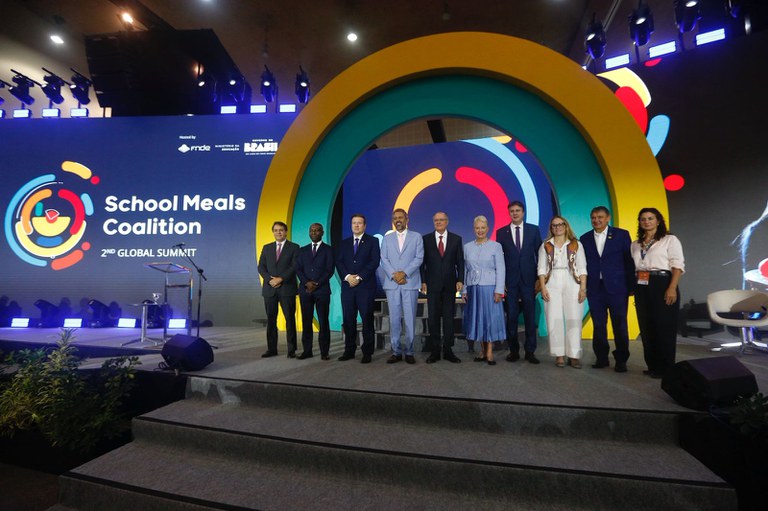
The meeting brought together delegations from 80 countries and was attended by the Vice President of Brazil, Geraldo Alckmin, as well as the Minister of Education of the country, Camilo Santana. In her speech, Fernanda Pacobahyba, president of the FNDE, stated that to ensure that all 724 million primary school students in the world receive food by 2030, “it is essential to strengthen international cooperation, mobilize resources, share knowledge, and build strong collaboration networks.”
In her speech, Pacobahyba also highlighted the work of the RAES Network. She mentioned the international technical mission carried out in Manaus in August, with 15 countries, which presented the experience of implementing school feeding in the Amazon, its opportunities and challenges. The regime of collaboration and shared responsibility among federal, state, and municipal levels was emphasized. “Our RAES is our network that engages with local realities, which brings enormous richness. That is why we are also in the Coalition: one of the axes that Brazil contributes is our expertise and what we have built together with Latin America and the Caribbean in partnership with the ABC, FAO, and the countries.”
Meetings and dialogues
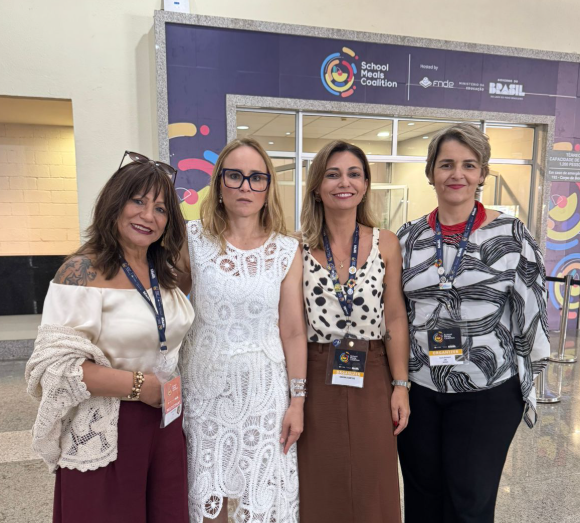
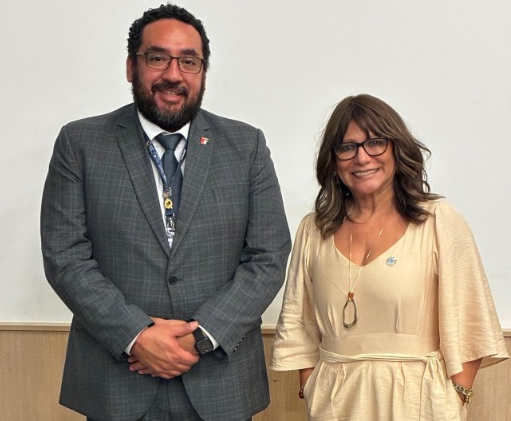
The event fostered dialogue among representatives of different countries. The executive secretary of the RAES Network, Najla Veloso, had the opportunity to maintain contact with various entities and actors at the global and regional levels, and especially to hold conversations with the Minister of Education of Chile, Nicolás Cataldo; with counselor Carolina Pallas, of the Central Board of Directors (CODICEN) of the National Administration of Public Education of Uruguay; with Donald Bundy and the team from the Research Consortium of the School Meals Coalition. Bundy is also professor at the London School of Hygiene & Tropical Medicine.
Oscar Requena, Minister of Education of Belize, was one of the representatives of RAES member countries at the event. “I want to take this opportunity to thank RAES for the wonderful work they continue to do. Through this coalition and through this network of countries supporting each other, RAES has provided a lot of technical support to our countries. We are very grateful because it helps us to learn new experiences, particularly in how we can strengthen our policies as countries and how we can support the expansion of the school feeding program.”
Stand
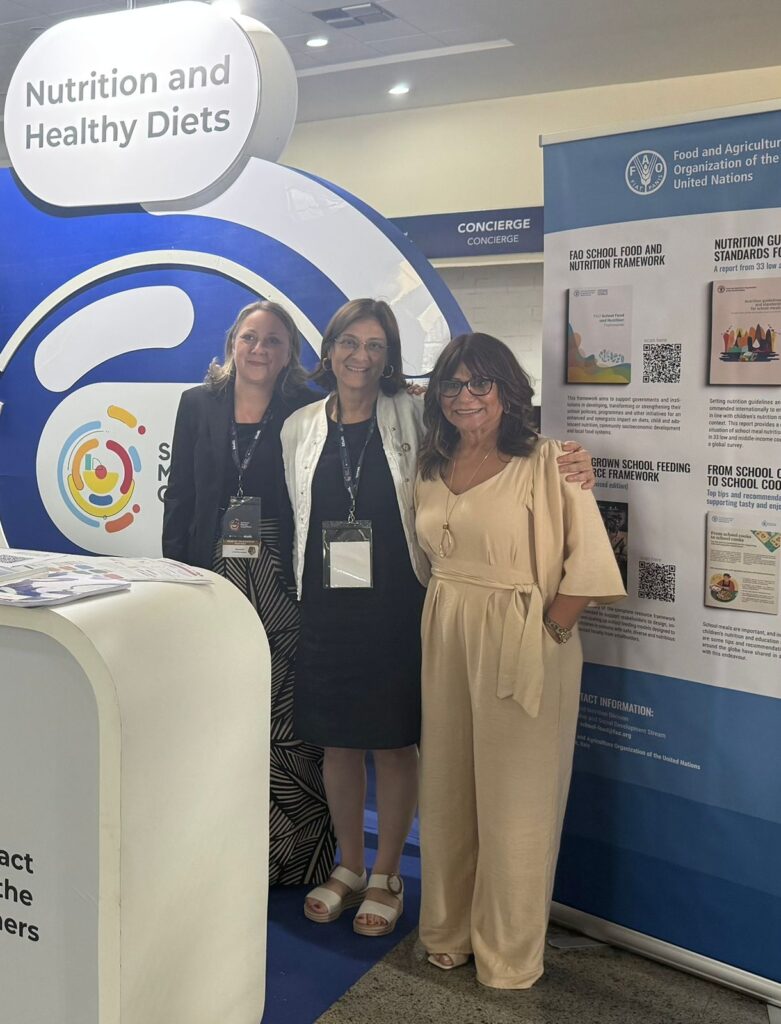
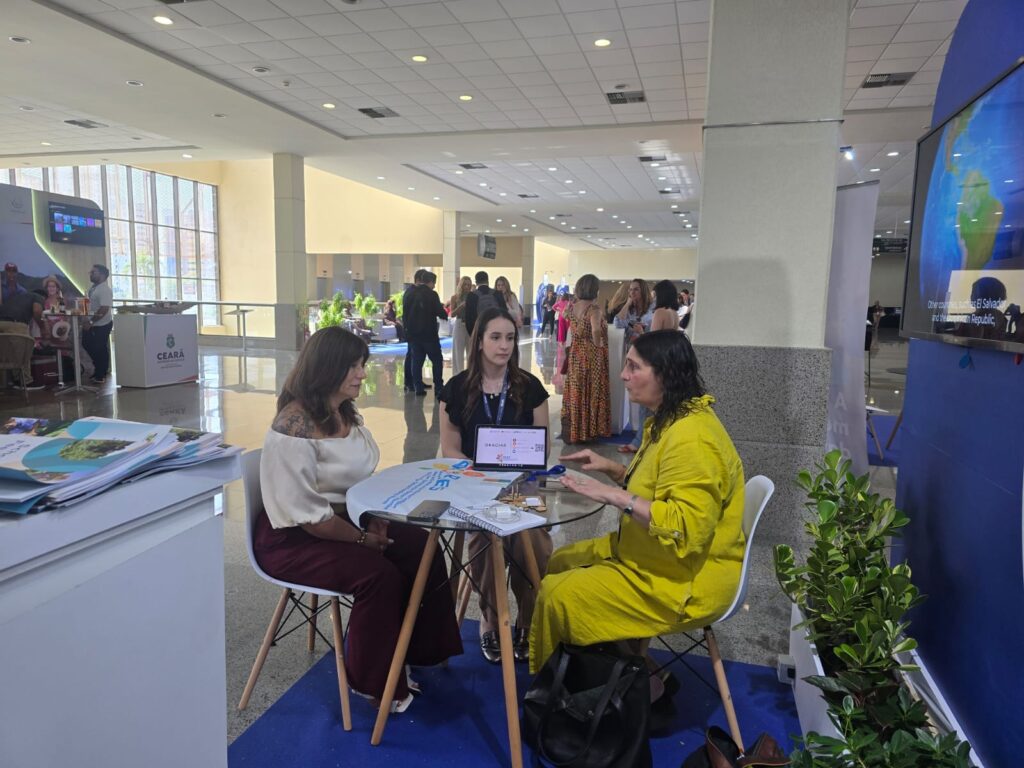
The RAES Network was present at the stand of Brazilian international cooperation in school feeding, organized by the Brazilian Cooperation Agency. The space at the stand was an opportunity to connect with different strategic audiences present at the event and to give visibility to the work of RAES.
New evidence on school feeding
During the event, the publication The State of School Feeding 2024 was launched, with new data on school feeding worldwide. Currently, around 466 million students receive school feeding, almost 80 million more than four years ago. Another key figure from the report is the source of financing: 99% of the US$ 84 billion invested annually worldwide comes from domestic resources, reflecting a strong governmental commitment.
However, challenges remain: half of the primary school-aged children who still do not receive school meals live in low-income countries, where the average coverage is 27%.
International Day of School Feeding Science
On September 17, the International Day of School Feeding Science event was held virtually, an initiative of the Research Consortium for School Health and Nutrition, as part of the actions leading up to the summit. The meeting brought together specialists and researchers from various countries in a webinar that addressed the most recent evidence in support of school feeding programs.
Some of the topics discussed were the impact of climate change, financing mechanisms, linkage with family farming, the guarantee of the human right to food, as well as the progress and challenges in implementing programs in different regions of the world.
Najla Veloso, executive secretary of the RAES Network, presented the work of the Network, the mission, and the action axes of this initiative, such as the promotion of dialogues among actors at different levels of government, technical support to national school feeding programs, capacity development of professionals involved in this issue, exchange of experiences, and generation of data and evidence. The executive secretary concluded by emphasizing that working as a network promotes the acceleration of the expected quality improvement for school feeding programs.