Document brings together the main findings of a joint work trajectory developed between the Government of Brazil and FAO in the region.
Paulo Beraldo and Palova Brito
Brasília, Brazil, October 8, 2025 – A new publication compiles evidence and analyzes more than 15 years of progress in school feeding programs in Latin America and the Caribbean, the result of a South-South cooperation initiative promoted by the Government of Brazil and the Food and Agriculture Organization of the United Nations (FAO), within the framework of the Brazil-FAO International Cooperation Programme on School Feeding.
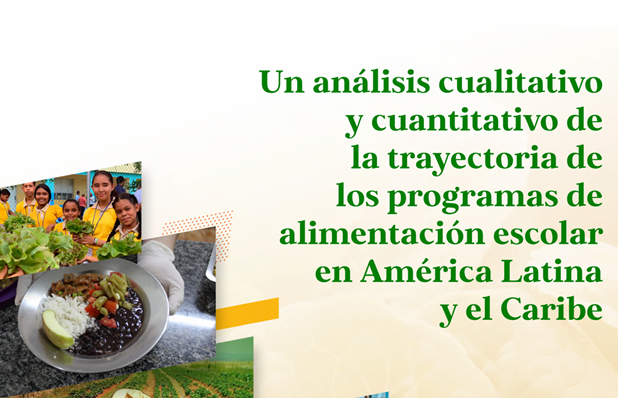
The publication, entitled A qualitative and quantitative analysis of the trajectory of school feeding programmes in Latin America and the Caribbean, presents conceptual advances, collectively built understandings, challenges, progress, updated data, recommendations, and future perspectives for school feeding programmes (SFP) in the region. The objective is to standardize information and enable the development of baselines that serve as a reference for new actions. The document is available in Spanish.
The school feeding international cooperation has been jointly developed since 2009 by the Brazilian Cooperation Agency of the Ministry of Foreign Affairs (ABC/MRE), the National Fund for Educational Development (FNDE), and FAO.
“With this publication, the Brazil-FAO Cooperation Programme reaffirms its commitment to strengthening and institutionalizing school feeding policies and programmes, promoting the development of human and institutional capacities of partner countries. In addition to the tangible progress and results achieved, we recognize that there is still a path to be pursued to ensure adequate, healthy, and quality school feeding for students in the region,” said Ruy Pereira, Director of ABC/MRE.
Fernanda Pacobahyba, President of FNDE, reaffirmed the institution’s support and recalled that since 2009, school feeding programmes and the institutionalization of public procurement from family farming have been consolidated in the region. “At the same time, new priorities and challenges have emerged, such as addressing crises caused by climate change, which increasingly impact production, access to food, the quality of education, and nutrition,” she stated.
Investment and expansion of the school feeding programmes
The study compiles information from the period between 2012 and 2022 and provides a regional synthesis based on national reports. Significant advances were recorded in several components of the SFP, especially in student coverage, number of days with meal provision, financing, per capita investment per student, food supply, and procurement modalities.
The total investment in school feeding programmes in the 16 countries analyzed, for example, increased from USD 2.63 billion to USD 3.52 billion in 2022. Of the 16 countries, 12 increased their budgets during the period. The document highlights the existence of numerous regulatory frameworks linked to the SFP, reflecting an important process of strengthening these policies at national, regional, and global levels.
Between 2012 and 2022, substantial changes were recorded in the implementation of food and nutrition education (FNE) actions, in intersectoral coordination, in public procurement from family farming, and in strengthening the capacities of thousands of professionals. Important progress was also achieved in the establishment of national school feeding committees, expressing a common and coordinated interest with a collective vision aimed at improving and strengthening the SFP.
The publication also highlights the role of the Sustainable School Feeding Network (RAES), created in 2018 as a technical space for exchange and cooperation. The Network has systematized data, evidence, and good practices that today guide decision-making in member countries.
Sustainable Schools: an expanding methodology
In the last decade, there has been a significant increase in the number of Sustainable Schools in Latin America and the Caribbean. In 2011, there were 11 schools; by 2022, the number had reached 23,385 across the region.
This initiative, created by the Brazil-FAO International Cooperation Programme in partnership with countries, has become a key factor in promoting a comprehensive vision of SFP, fostering social participation, intersectorality, FNE, school gardens, improved infrastructure, adequate menus, and food procurement from family farming.
Daniela Godoy, Senior Policy Officer for Food and Nutrition Security at FAO, highlighted that the experience with countries in the region has shown that the Sustainable Schools methodology enables the transformation of agrifood systems and ensures better nutrition:
“With the contributions of this study led by the Brazil-FAO International Cooperation Programme, we reaffirm the importance of Sustainable Schools as a valuable strategy to guarantee the right to adequate food. FAO is committed to making the regional school feeding agenda a flagship for improving the health, nutrition, and development of the region’s children and youth.”
Challenges for the future
Although the document acknowledges significant progress, it also highlights challenges that must be addressed to consolidate the programmes. Among them are the universalization of coverage, the promotion of healthy, relevant, and adequate menus, and the consolidation of comprehensive programmes that include food and nutrition education, social participation, adequate infrastructure, school gardens, public procurement from family farming, and alignment with environmental and climate agendas.
The study also emphasizes the need to strengthen regulatory frameworks, improve school infrastructure, ensure food safety, and more effectively link public procurement to the SFP, as well as reinforce the training of professionals and educational communities.
In this regard, Najla Veloso, Executive Secretary of RAES and Senior School Feeding Specialist at FAO, highlighted that based on the progress and challenges of school feeding, “it is increasingly essential to create national policies from a regional and global perspective, aimed at generating positive impacts on school feeding. These policies must establish principles, guidelines, objectives, indicators, methodologies, governance, and goals in the short, medium and long term for each country.”
Link to the document: https://redraes.org/un-analisis-cualitativo-y-cuantitativo-de-la-trayectoria-de-los-programas-de-alimentacion-escolar-en-america-latina-y-el-caribe/