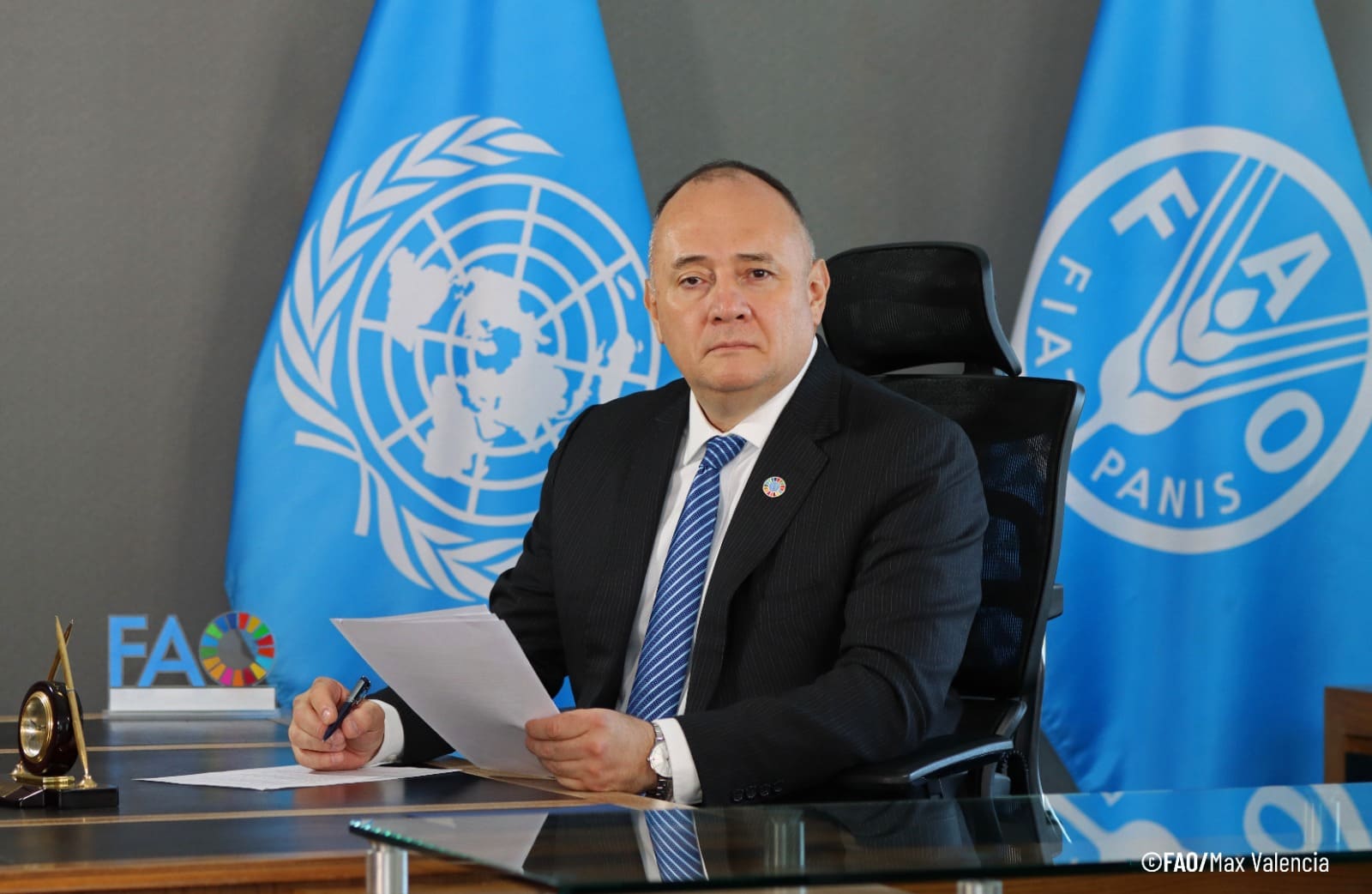
By Rene Orellana Halkyer, Assistant Director-General and Regional Representative of the Food and Agriculture Organization of the United Nations for Latin America and the Caribbean
Eradicating hunger is an ethical imperative and an essential condition for countries’ development. Therefore, every step forward in reducing it is not just an encouraging figure; it is a sign that, with political commitment and appropriate public policies, it is possible to transform realities and improve lives.
The most recent data from the 2025 Regional Overview of Food Security and Nutrition, prepared by FAO together with other United Nations agencies, confirm that undernourishment declined for the fourth consecutive year. In 2024, it affected 5.1% of the population, down from 6.1% recorded in 2020. In concrete terms, 6.2 million people no longer suffer from hunger.
This progress deserves recognition, not only for its impact on the lives of those who no longer endure hunger, but also because it shows that public policy decisions adopted by countries generate real transformations. When national authorities demonstrate strong political commitment and promote measures for economic recovery, social protection, support for family farming, productive innovation, and the promotion of agrifood trade, among others, results are achieved.
However, we must continue joining efforts and working together, as more than 33 million people in the region still suffer from hunger. A total of 167 million face food insecurity, 181 million cannot afford a healthy diet, and 141 million adults suffer from obesity.
These figures reflect a persistent paradox of the double burden of malnutrition across all our countries: we live with both hunger and overweight, with nutritional deficiencies and unhealthy diets. Moreover, access to a healthy diet remains limited due to its high cost, which amounts to 5.16 international dollars (PPP-adjusted to each country’s purchasing power parity) per person per day—the highest in the world.
The high cost of a healthy diet is one of the causes of food insecurity and malnutrition. Added to this are economic challenges, limited access to fresh and healthy foods, and the consequences of extreme climate events, which impact agrifood systems and require policies to address their sustainability and resilience.
Hunger reflects and deepens poverty and inequality. It is not fair that access to food or healthy diets should be a privilege for some.
The upcoming 39th FAO Regional Conference for Latin America and the Caribbean (LARC39) represents an opportunity for dialogue and decision-making.
This implies strengthening family farming and sustainable production systems to eradicate hunger and poverty and reduce inequalities; expanding coverage and improving school feeding programmes, incorporating public procurement from family farming and food-based dietary guidelines; implementing subsidies so that the most vulnerable people can access nutritious, high-cost foods; and promoting food environments in cities that facilitate access to and consumption of healthy diets.
Furthermore, it is important to strengthen and modernise supply systems, promote agrifood trade to ensure availability of and access to a greater variety of foods, expand the coverage of robust social protection systems with synergies with productive inclusion programmes and an emphasis on reducing hunger and poverty, invest in innovation and digitalisation to enhance production, productivity and climate resilience, and mobilise financing for large-scale investments through the Hand-in-Hand Initiative.
The region has shown that it can move forward. Now the challenge is to sustain that momentum and make it inclusive, so that everyone can access food and healthy diets.
Since 1945, FAO has supported its Member States through the generation of data and scientific evidence, technical cooperation to implement policies and actions, and the mobilisation of investments. Currently, FAO is implementing in the region the 2022–2031 Strategic Framework through four Regional Priorities aligned with the Four Betters – Better Production, Better Nutrition, a Better Environment and a Better Life – strengthening sustainable production, food security and nutrition, climate action and social inclusion.
Together, we can work to develop appropriate policies and programmes that drive change and create more efficient, inclusive, resilient and sustainable agrifood systems for food security and nutrition.