Sixteen countries discussed the RAES Network’s priorities for the next four years.
Paulo Beraldo and Palova Brito
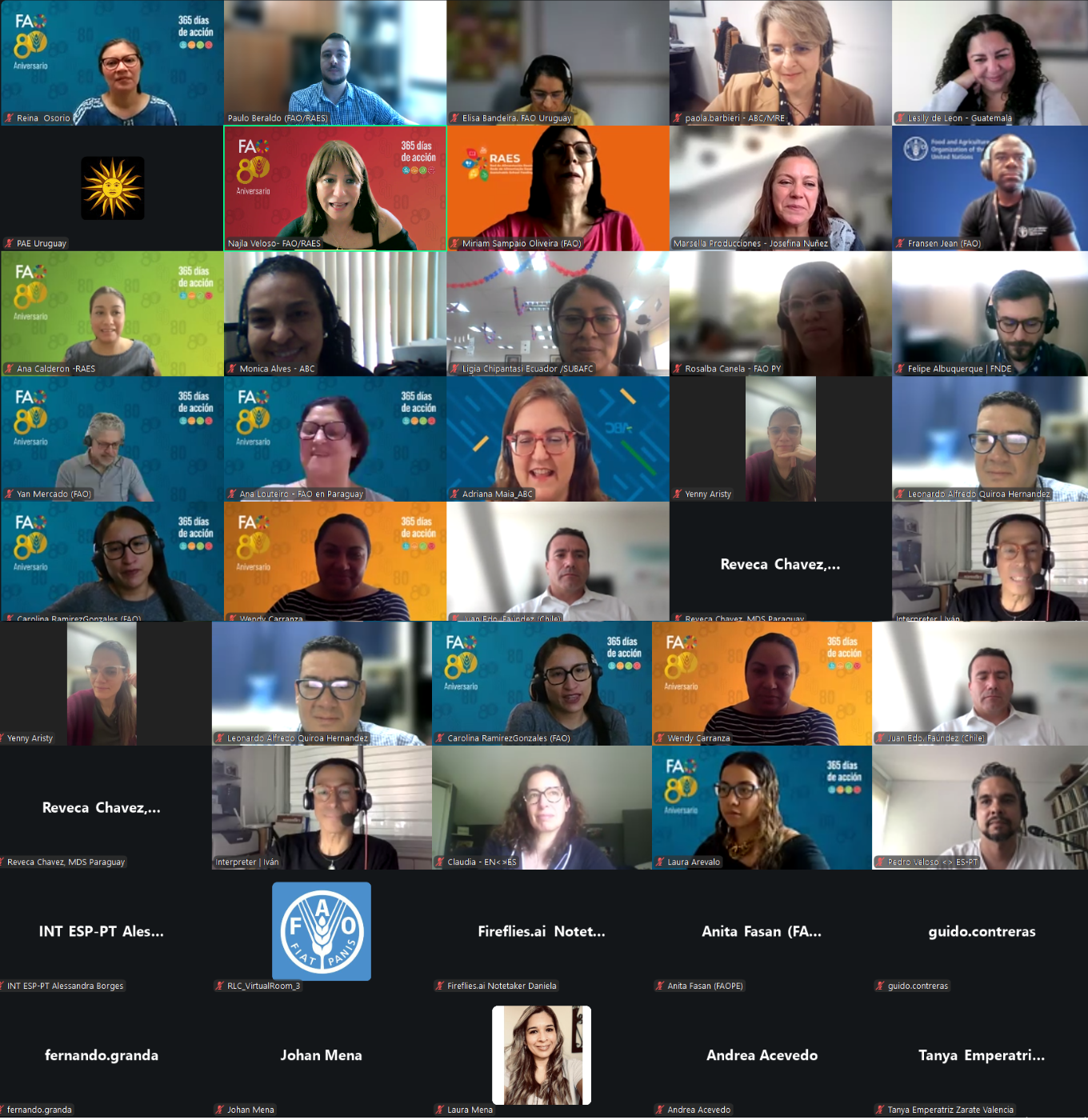
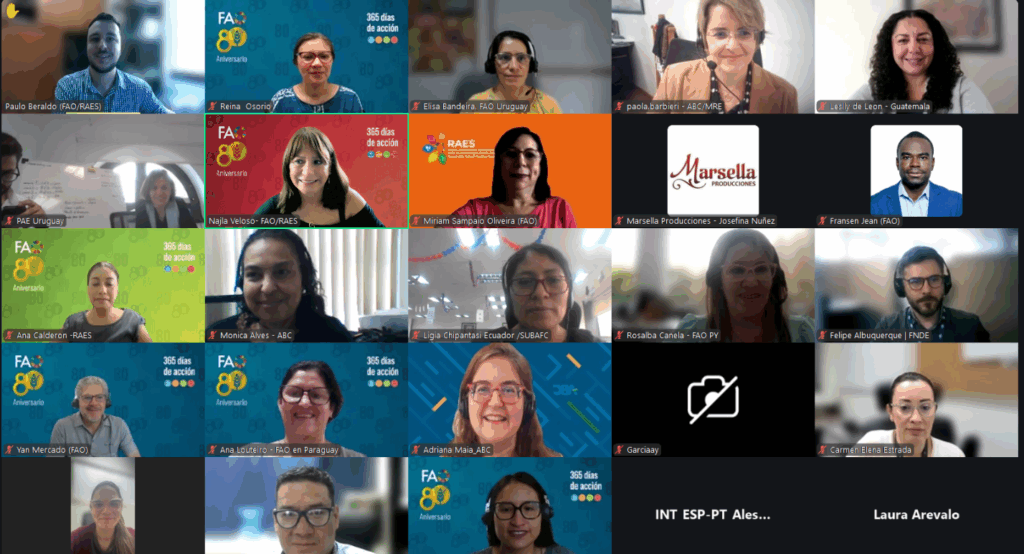
Brasília, Brazil, 1 December 2025 – The Executive Secretariat of the Sustainable School Feeding Network (RAES) and representatives of its member countries met on 28 November to review the proposed regional agenda for school feeding in Latin America and the Caribbean (LAC) for the 2026–2030 period.
Representatives from 16 countries participated: Belize, Brazil, Chile, Colombia, Costa Rica, Cuba, Ecuador, El Salvador, Guatemala, Honduras, Paraguay, Peru, the Dominican Republic, Saint Kitts and Nevis, Suriname and Uruguay.
Created in 2018, RAES is implemented by the Brazilian Cooperation Agency of the Ministry of Foreign Affairs (ABC/MRE) and the National Fund for Educational Development (FNDE/MEC), with the Food and Agriculture Organization of the United Nations (FAO) serving as its executive secretariat. The Network currently includes 18 countries in the region.
Building the regional agenda for the next four years is essential for coordinating actions and work plans among countries, and represents another step in the process launched in 2009 to strengthen school feeding programmes under the Brazil–FAO International Cooperation Programme.
The proposal is based on the principle that school feeding is a key social policy to ensure the human right to adequate food. To achieve this, it must guarantee nutritional quality standards and coverage for all students enrolled in public school systems across the region.
The agenda also seeks to reinforce links with the Sustainable Development Goals, the Global Alliance Against Hunger and Poverty, and the School Meals Coalition, strengthening the regional and global movement around the topic.
RAES Roadmap
During the meeting, the first version of the document that will serve as a guide for planning, resource mobilization, and coordination with international organizations, academia and other institutions was presented. The document organizes actions into cross-cutting axes, thematic areas and an operational structure.
The document is based on the main challenges identified by countries over the years, as well as studies, evaluations and the accumulated experience of Brazil–FAO cooperation. Seven thematic areas were defined:
i) management and governance;
ii) healthy diets;
iii) food, nutrition and environmental education;
iv) public procurement from family farming;
v) legal frameworks;
vi) financing;
vii) monitoring and evaluation.
After the presentation, countries will have a period to review the document and submit comments and suggestions until January 26, 2026. The final agreed version will be presented at the next RAES meeting, scheduled for February 9, 2026.
Paola Barbieri, project analyst at ABC/MRE, highlighted that this is a key moment for the Network, as the document will guide its actions in the coming years. She added that she hopes the priorities and expectations of the countries will be reflected in the text. “In our cooperation experience, the development of a thematic agenda has become a fundamental tool to guide and strengthen cooperation processes,” she said.
Najla Veloso, FAO specialist and RAES executive secretary, emphasized that the agenda must reflect the region’s aspirations regarding school feeding. “This agenda supports the institutionalization of programmes, strengthens countries, managers and RAES itself. It is a regional contribution to national management.”

The voice of the countries
During the discussion, focal points from Uruguay stressed that the agenda is ambitious and will support the strengthening of school feeding programmes at the national level. They also underlined the importance of ensuring that future agreements are free from conflicts of interest and respect the human right to food.
Representatives from Guatemala noted that this is a valuable document that must be agreed upon with national authorities. Belize, in turn, stated that the proposal is well aligned with the country’s priorities.