Najla Veloso, executive secretary of the Sustainable School Feeding Network (RAES)
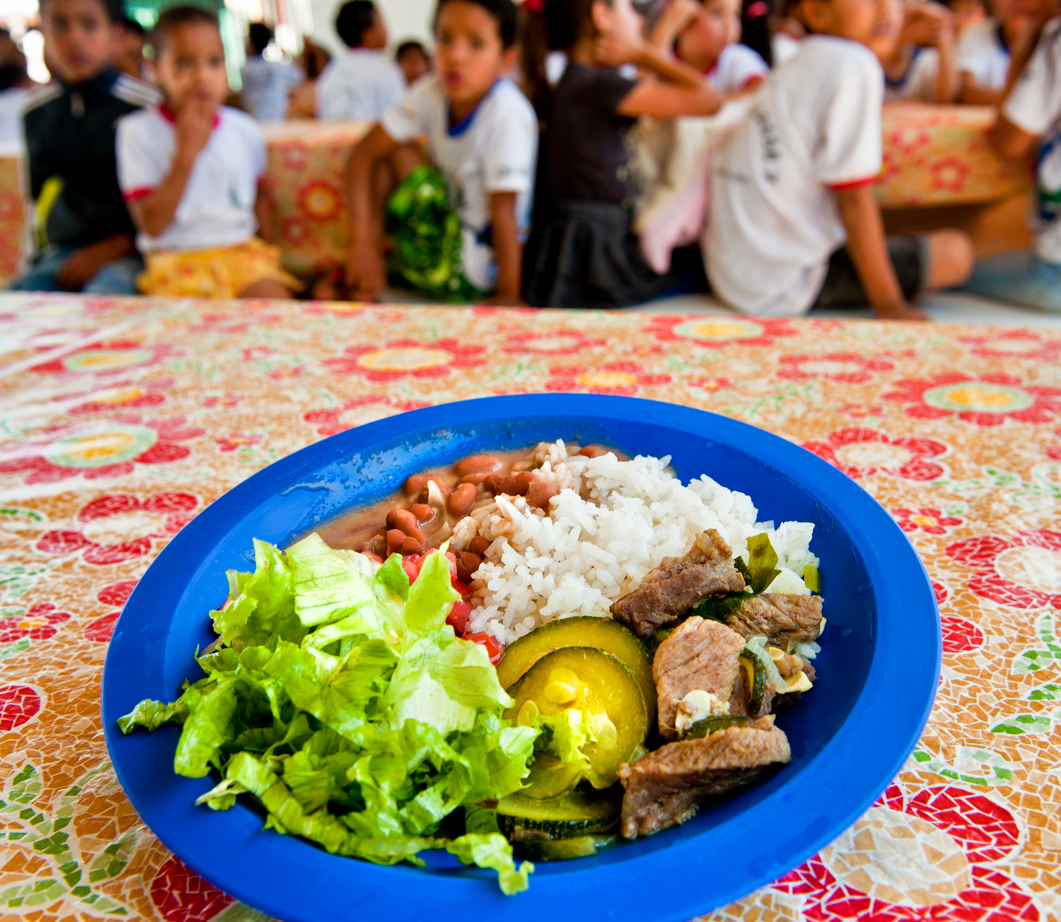
The celebration of the National School Feeding Day in Brazil, on October 21, 2025, reinforces the importance of this essential public policy in the lives of millions of students in Brazil, Latin America, the Caribbean, and around the world. This date invites us to reflect on the positive impacts of school feeding on education, nutrition, health, and also on sustainable development.
Therefore, the Executive Secretariat of the Sustainable School Feeding Network (RAES), on behalf of its member countries, congratulates the Government of Brazil, especially the National Fund for Educational Development (FNDE), for the implementation of Brazil’s National School Feeding Programme (PNAE). This is a public policy that not only benefits around 40 million students it serves daily, but also inspires progress in Latin America, the Caribbean, and globally.
The PNAE’s achievements are numerous and continue to inspire efforts to strengthen and consolidate school feeding programmes throughout the region. The 2009 School Feeding Law of Brazil, a fundamental milestone of this public policy, served as a reference for the creation of similar legislation in at least seven countries of Latin America and the Caribbean, contributing to the institutional strengthening and sustainability of these programmes.
Besides that, the requirement that at least 30% of public purchases be made from family farming has also inspired other countries to adopt similar legal frameworks, ensuring fresher, locally sourced food and promoting local territorial development.
We recall that, since 2009, the Brazil–FAO International Cooperation Programme — a partnership between FNDE, the Brazilian Cooperation Agency (ABC), and the Food and Agriculture Organization of the United Nations (FAO) — has worked to strengthen and consolidate school feeding programmes across the region.
We are also proud to have helped change the paradigm of school feeding. Once seen as an assistentialist policy, it is now recognized as a structural strategy to guarantee the human right to adequate food for millions of students. It is an essential public policy — structural, cross-cutting, and transformative — with multiple impacts on the Sustainable Development Goals (SDGs).
We reaffirm our commitment to continue strengthening dialogue and the exchange of experiences around school feeding in our region and to work so that all students in Latin America and the Caribbean have access to healthy, adequate, and nutritious food in schools.