Paulo Beraldo
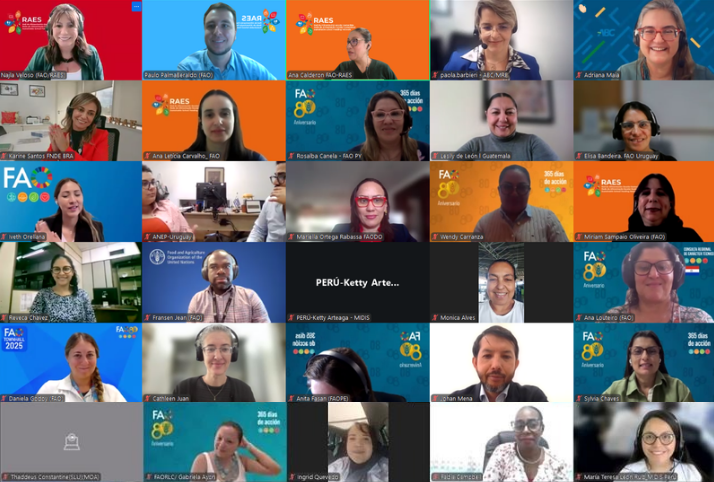
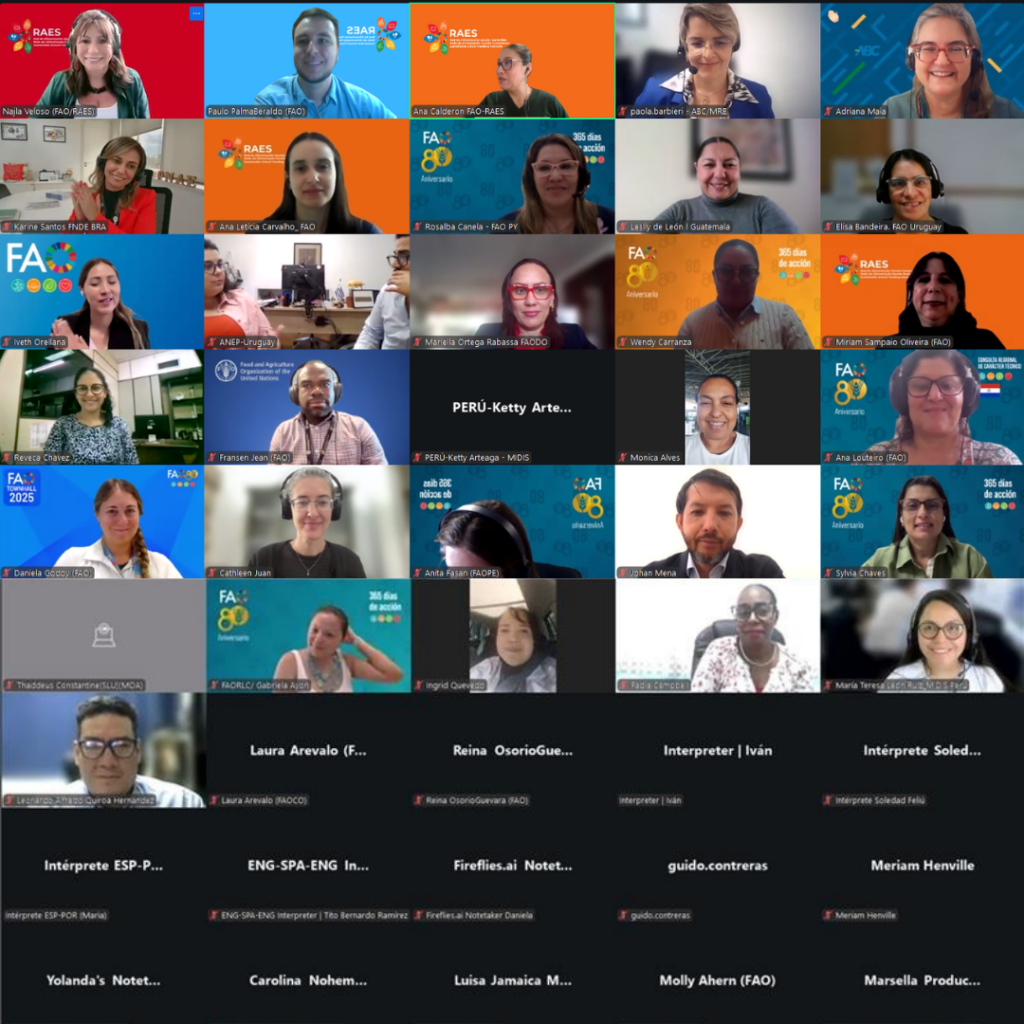
Brasília, Brazil, 25 February 2026 – The focal points of the member countries of the Sustainable School Feeding Network (RAES) took part in a meeting on 24 February 2026 to validate and follow up on the document RAES Regional Agenda: For Sustainable School Feeding in Latin America and the Caribbean – 2026/2030.
The final version of the document was presented and reviewed, incorporating comments and contributions submitted by countries in recent months. It was agreed that the document will be signed by the authorities responsible for the countries’ school feeding programmes (SFP). In turn, the RAES Secretariat will begin the layout process of the document in English, Spanish and Portuguese.
The Sustainable School Feeding Network (RAES) is a trilateral South-South cooperation initiative on school feeding, promoted by the Government of Brazil, through the Brazilian Cooperation Agency (ABC), the National Fund for Educational Development (FNDE), and its 18 member countries, with the executive secretariat provided by the Food and Agriculture Organization of the United Nations (FAO).
Opening the meeting, Israel Ríos, FAO Nutrition Officer, underscored the importance of school feeding programmes as a strategic policy to achieve the transformation of agrifood systems. “SFPs do not only deliver food. They are an educational platform with multiple benefits and are essential for better nutrition.”
Cecilia Malaguti do Prado, responsible for South-South cooperation with international organizations at the Brazilian Cooperation Agency (ABC), thanked the implementing institutions of RAES and the member countries for their commitment. She noted that validating the agenda reflects the work carried out since the network’s conception in 2018.
“It is a document that will guide our actions in Latin America and the Caribbean towards strengthening SFPs. It reinforces the visibility of RAES, of the countries and of the region, while also enabling partnerships with other non-governmental alliances.”
Karine Santos, General Coordinator of Brazil’s National School Feeding Programme (PNAE), stated that the regional school feeding agenda reflects the progress made by Latin America and the Caribbean towards more sustainable programmes. She emphasized that coordinated work among countries was decisive, especially during the pandemic period, when virtual meetings made it possible to maintain dialogue, exchange experiences and consolidate improvements in national policies.
“Our networking efforts are crucial. Many discussions and advances took place in those virtual spaces. This ongoing closeness is strengthening the development of more sustainable school feeding programmes,” she highlighted, recalling that the region’s work also has an impact on international initiatives such as the Global Alliance against Hunger and Poverty and the School Meals Coalition.
Najla Veloso, RAES Executive Secretary and FAO School Feeding Specialist, stressed that the participation of focal points was essential to strengthen the technical quality and legitimacy of the document. She recalled that this process was consolidated as a formal activity of the Network during the technical mission held in Manaus in August 2025. “The regional agenda is based on accumulated experiences and sustained work in the region. It is not a point of arrival or departure, but a document that drives processes and guides future actions,” she stated.
Daniela Godoy, FAO RLC Food Systems Policy Officer, added that the agenda will enable progress through SFPs and that these are key policies to strengthen food and nutrition security in Latin America and the Caribbean. “This agenda, structured around seven priority areas, will allow countries to strengthen and expand the work they are already carrying out, with the aim of improving their school feeding programmes. We reaffirm our commitment, as FAO and as the Brazil-FAO Cooperation project on school feeding, to continue advancing this process,” she concluded.
During the meeting, questions raised by countries were addressed, and others used the space to comment on the document. Sylvia Chaves, FAO focal point in Costa Rica, expressed her appreciation for the development of a document that translates key concepts in a concise yet substantive manner, covering the region’s priority topics. “I would also like to thank Brazilian cooperation for continuously supporting and driving this topic (school feeding programmes) forward in the region,” she said.
Next steps
As next steps, country authorities will sign the document, and in May a virtual seminar will be held to disseminate the RAES Regional Agenda: For Sustainable School Feeding in Latin America and the Caribbean – 2026/2030.