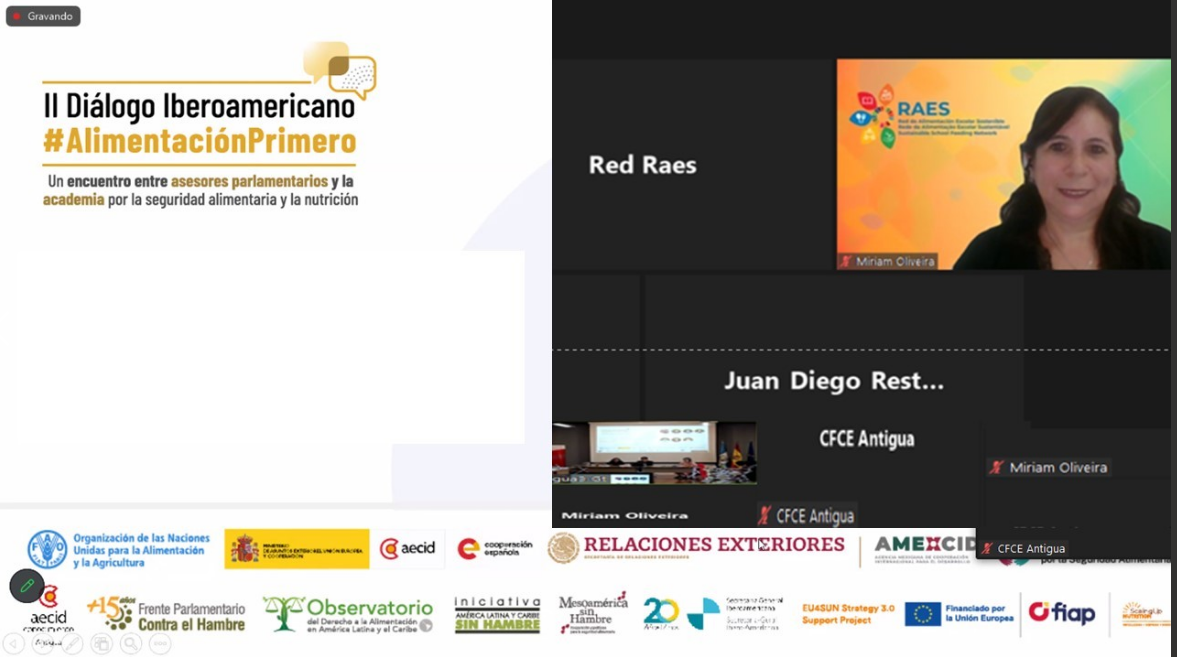
The Sustainable School Feeding Network participated virtually on April 10.
Paulo Beraldo
Brasília, Brazil, April 14, 2026 – The School Feeding Network (RAES) highlighted the role of school feeding as a public policy to strengthen the human right to adequate food at the II Ibero-American Dialogue #FoodFirst. The RAES participation was organized virtually on April 10.
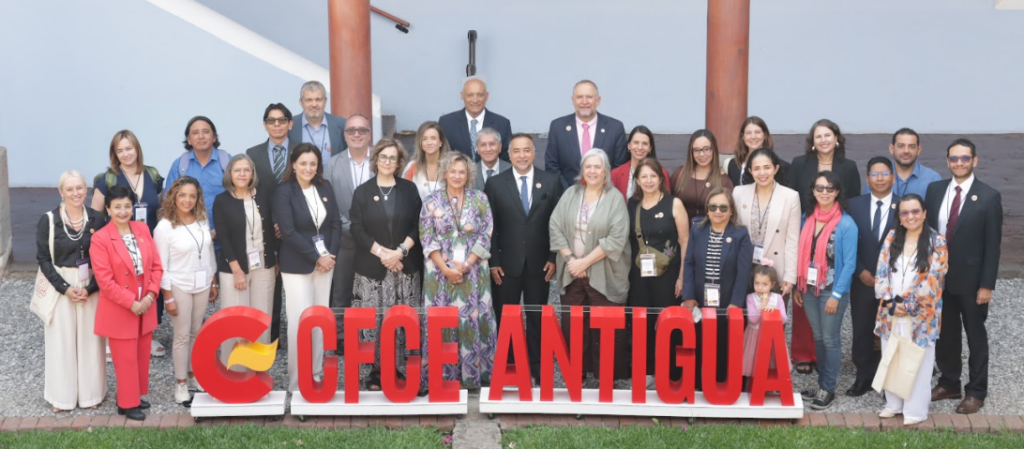
As part of the event, held from April 8 to 10 in Guatemala, the II International Congress, the XII Regional Academic Meeting of the Observatory of the Right to Food (ODA-ALC), and the In-Person Meeting of Ibero-American and Caribbean Parliamentary Advisors also took place. The event provided an opportunity to consolidate an intersectoral community committed to transforming food systems through a rights-based, gender-sensitive, and intercultural approach.
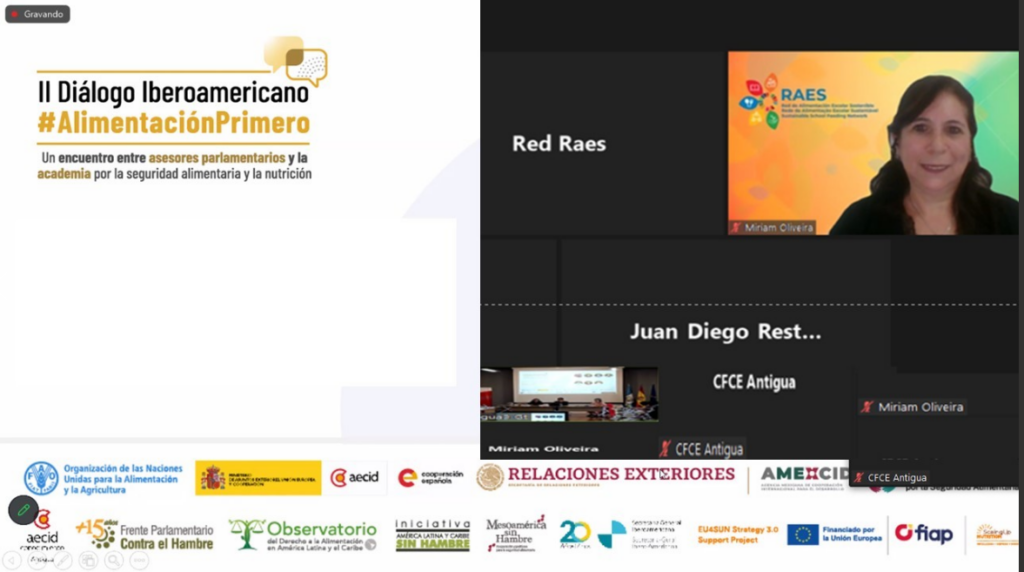
Miriam Oliveira, Regional Assistant of the RAES Executive Secretariat, highlighted the role of public policies in ensuring universal access to food and noted that school feeding programmes (SFP) are key tools for promoting students’ food and nutrition security.
In this context, she underscored the relevance of Trilateral South-South Cooperation between Brazil and the Food and Agriculture Organization of the United Nations (FAO), as well as RAES, aimed at strengthening these programmes in Latin America and the Caribbean and advancing the realization of the human right to adequate food.
RAES is a trilateral South-South cooperation initiative on school feeding, promoted by the Government of Brazil through ABC/MRE and FNDE, together with member countries, with the executive secretariat led by FAO. The Network currently comprises 18 member countries: Belize, Brazil, Bolivia, Chile, Colombia, Cuba, El Salvador, Ecuador, Honduras, Guatemala, Paraguay, Peru, the Dominican Republic, Saint Lucia, Saint Kitts and Nevis, Suriname, and Uruguay.
The RAES Regional Assistant emphasized that SFPs ensure regular access to food and help reduce food and nutrition insecurity. They also contribute to preventing nutritional deficiencies and non-communicable diseases, while promoting food and nutrition education. She further highlighted that these programmes support learning, improve school performance, and reduce absenteeism and dropout rates.
She also noted that, based on this approach, RAES member countries have a strong commitment to improve these programmes through the development and implementation of the “RAES Regional Agenda: for Sustainable School Feeding in Latin America and the Caribbean 2026–2030.”
During the event, it was highlighted that the alliance between academia, parliaments, and international cooperation promotes collaborative work and dialogue spaces for the exchange of knowledge and best practices as key pillars for strengthening more participatory, inclusive, and evidence-based public policies.
The dialogue also aimed to strengthen academic networks, as well as participants’ capacities through multidisciplinary and intersectoral dialogues, symposia, and presentations on the right to adequate food. On the occasion, the “Ibero-American Alliance of Universities for the Right to Food” was launched.
More information about the event: https://linktr.ee/IIDialogo_AlimentacionPrimero