Three virtual meetings were held to address experiences related to the management of school feeding programs and student attendance tracking.
Paulo Beraldo
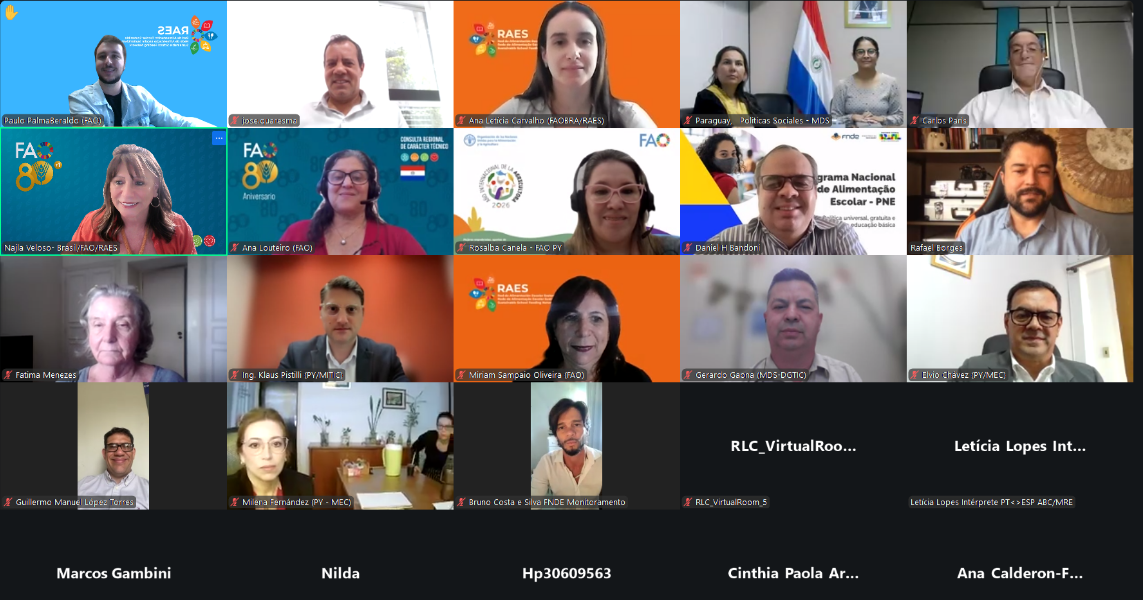
Brasília, Brazil, April 14, 2026 – At the request of authorities from the Government of Paraguay, the Sustainable School Feeding Network (RAES) organized three exchange meetings aimed at presenting different Brazilian experiences related to technological systems applied to the management of school feeding programmes (SFP) and student attendance monitoring.
The Ministry of Social Development (MDS) and the Ministry of Education and Sciences (MEC) of Paraguay, responsible for implementing the Zero Hunger in Schools Program, are currently working to strengthen their Integrated School Feeding System (SIAE). They have expressed interest in conducting a virtual exchange of experiences with Brazil to better understand the implementation and impacts of these systems, particularly regarding the planning and provision of school meals, as well as attendance monitoring. During the meetings, authorities highlighted that school feeding and the Zero Hunger program are emblematic national initiatives undergoing continuous strengthening and improvement.
Najla Veloso, Executive Secretary of RAES, emphasized that one of the network’s main objectives is to promote dialogue among the various actors involved in school feeding, ranging from government authorities—such as ministers, vice ministers, and managers—to teachers, kitchen staff, and other professionals in the field. In this context, RAES fosters capacity building and facilitates the exchange of experiences and innovations among countries, as part of its mission to strengthen school feeding programs in the region.
Biomtech FaceSchool System
The first initiative was presented by the company Biomtech, which specializes in facial recognition systems. On this occasion, the FaceSchool platform was introduced, designed to support attendance management and enhance security in the school environment. The system enables automated attendance registration through facial recognition and generates reports that feed directly into class records.
It also sends notifications of presence or absence to guardians and organizes data on student participation in school meals, facilitating accountability. The solution uses artificial intelligence to identify students and monitor their behavior in different contexts. During the presentation, the developers emphasized that it is not intended as a surveillance or monitoring tool.
One highlighted use is its integration with school feeding management. Based on the number of students present, kitchen teams can adjust the quantity of food prepared, helping to reduce waste. Data analysis also made it possible to identify that certain foods were associated with higher absenteeism rates, leading to menu adjustments and increased student participation.
According to the company, experiences implemented in Brazilian municipalities such as Betim (MG) and Vespasiano (MG) show improvements in educational indicators, including an increase in the Basic Education Development Index (IDEB), associated with better attendance control and reduced school dropout rates. Currently, the company operates in 18 cities across Brazil, covering 450 schools and approximately 140,000 students.
Smart School Feeding (AEI)
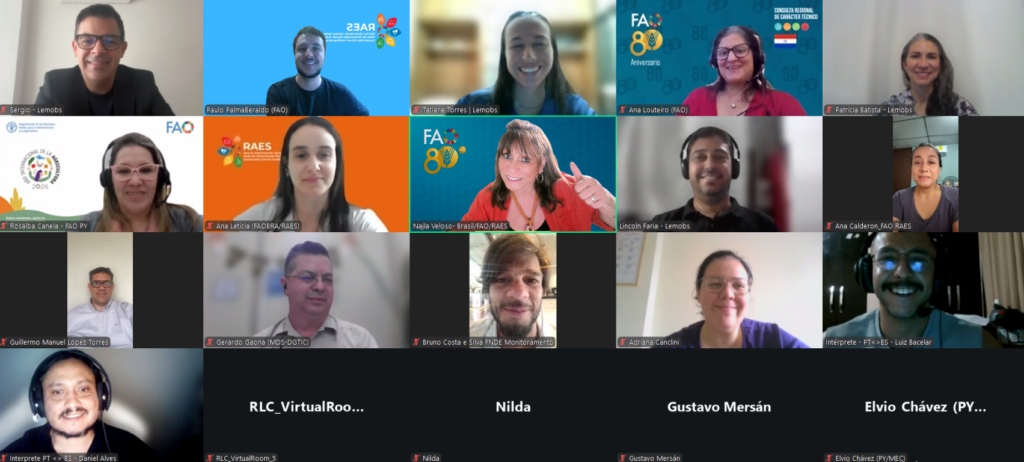
The second experience presented was the Smart School Feeding (AEI) initiative, created by the company Lemobs. Lemobs is a startup that provides solutions for public management and is part of the innovation ecosystem of the Technology Park of the Federal University of Rio de Janeiro (UFRJ). The initiative aims to improve the efficiency of school feeding program management through the use of technology, reduce food waste, strengthen family farming, and ensure nutritional quality for students.
The platform enables integration among different stakeholders, including managers, secretaries, nutritionists, warehouse staff, and cooks, facilitating coordination and decision-making. Its main features include support for the development of recipe sheets and nutritional calculations, menu planning, generation of shopping lists, and assistance in public procurement processes. It also includes tools for managing inventories, contracts, and suppliers, as well as continuous monitoring for data-driven decision-making.
Regarding family farming, the system incorporates mechanisms for tracking orders, forecasting purchases, and prioritizing products sourced from this sector. It also includes the mapping of women farmers and the management of contracts linked to family farming. In addition, its technology makes it possible to analyze the number of students present and estimate the volume of food needed each day.
During the presentation, the Aproveita+ methodology was also highlighted, a tool designed to diagnose and reduce food waste in schools. The system optimizes menu planning, inventory and cost control, food acceptance evaluations, and allows measurement of food waste.
Municipality of Rio Brilhante
The third experience presented the perspective of the municipality of Rio Brilhante (MS), with a population of around 37,000 inhabitants. The city has 12 municipal schools, 10 early childhood education centers, and one youth and adult education center (EJA), which together serve 1,246 students and require the preparation of 13,644 meals per day. The application used, AEI, helps organize data, supports menu planning, and provides training for teams.
AEI, one of Lemobs’ solutions, aims to bring innovation to public management, particularly in school feeding policy. Through facial recognition, it is possible to analyze the number of students present and estimate the required volume of meals. In addition, menu acceptance tests are conducted. The municipality has also implemented the Aproveita+ initiative to ensure nutritionally adequate meals and reduce waste.
To reduce waste, the municipality conducts student counts in the morning, evaluates menu acceptance, and considers factors such as rainfall and absenteeism, which are more frequent on Mondays and Fridays. They also pay attention to food presentation, encourage students to try different meals, and serve smaller portions for second helpings.
With the implementation of these practices, managers were able to reduce the equivalent of approximately 25,000 meals and achieve savings of R$200,000 (around USD 40,000) in one year.
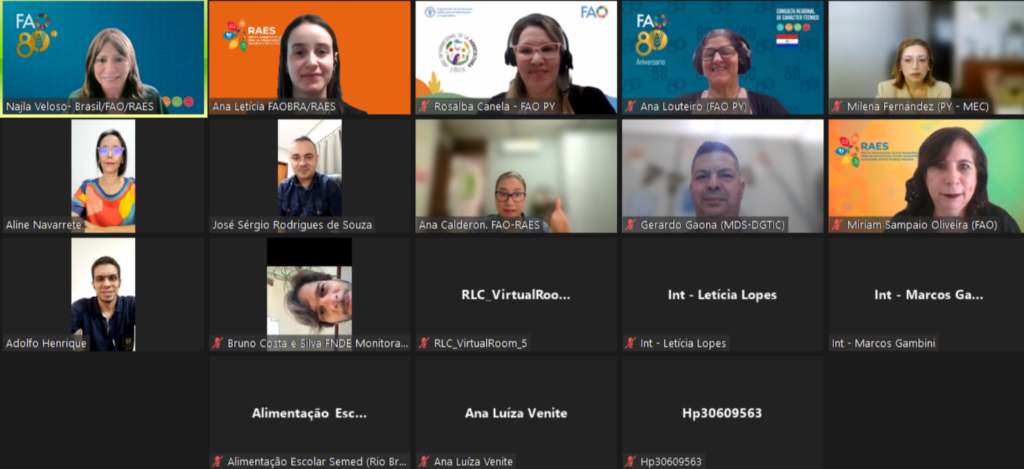
Participants
From Paraguay, participants included professionals from the Ministry of Social Development (MDS), such as Carlos Paris, Vice Minister of Social Policies, and Reveca Chávez, Director General of Planning for Development, as well as other directors and technical staff. From the Ministry of Education and Sciences (MEC), Andrea Milena Fernández Leguizamón, Director of School Feeding, and other professionals in school feeding, food and nutrition education, and social support were present.
From the Ministry of Information and Communication Technologies (MITIC), participants included Vice Minister Klaus Pistilli and Guillermo López, Project Manager for the development of the Integrated School Feeding System (SIAE). From the Government of Brazil, coordinators and advisors from FNDE participated. Teams from RAES and FAO Paraguay were also present.
RAES is a South-South trilateral cooperation initiative on school feeding, promoted by the Government of Brazil through ABC/MRE and FNDE, together with member countries, with its Executive Secretariat led by FAO. The network currently includes 18 member countries: Belize, Brazil, Bolivia, Chile, Colombia, Cuba, El Salvador, Ecuador, Honduras, Guatemala, Paraguay, Peru, the Dominican Republic, Saint Lucia, Saint Kitts and Nevis, Suriname, and Uruguay.