During the II RAES Exhibition, promoted by FAO and the Government of Brazil, 10 countries presented concrete solutions on healthy diets, food and nutrition education, procurement from family farmers, and more efficient management of school feeding programmes.
Paulo Beraldo and Palova Brito
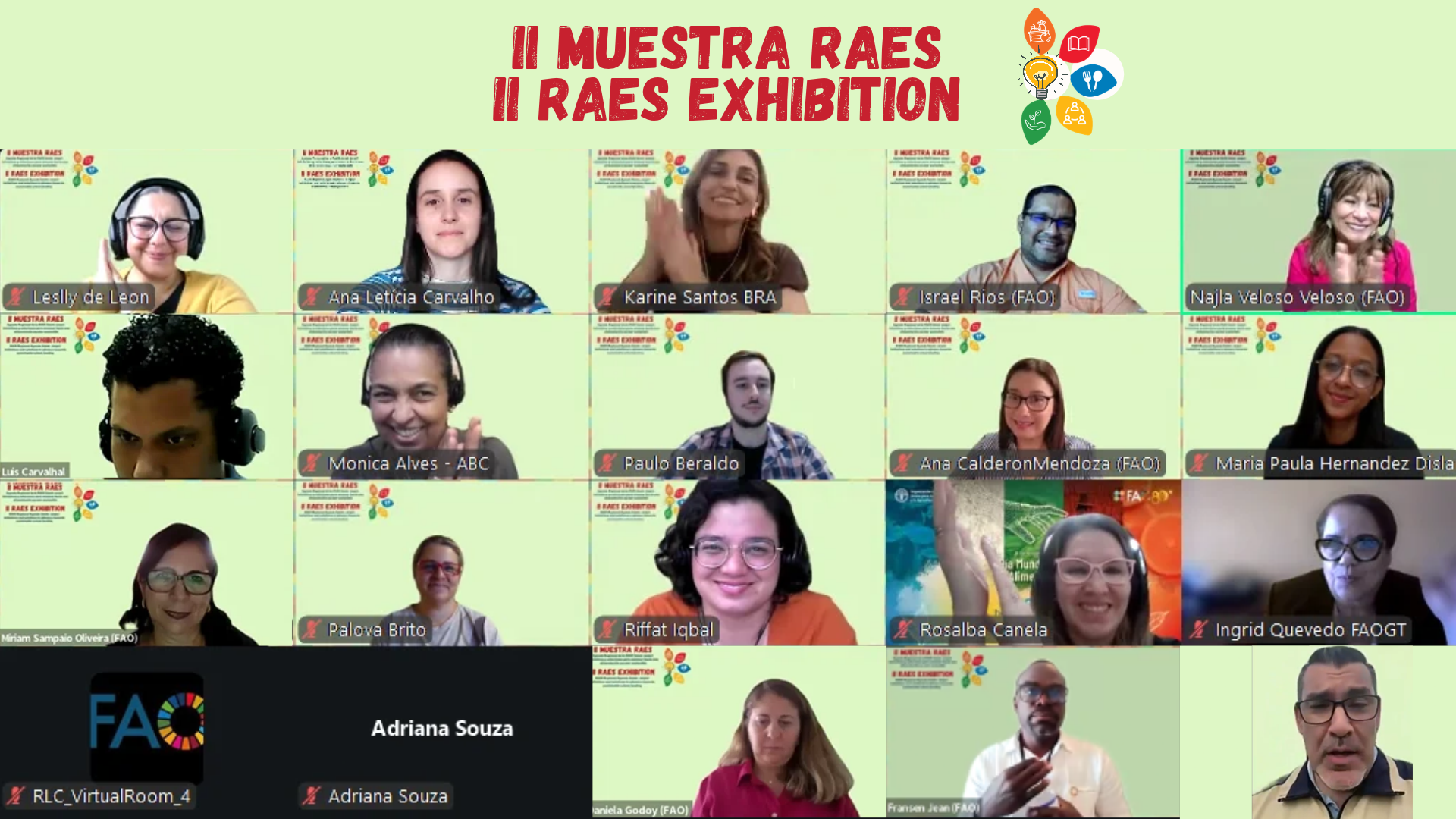
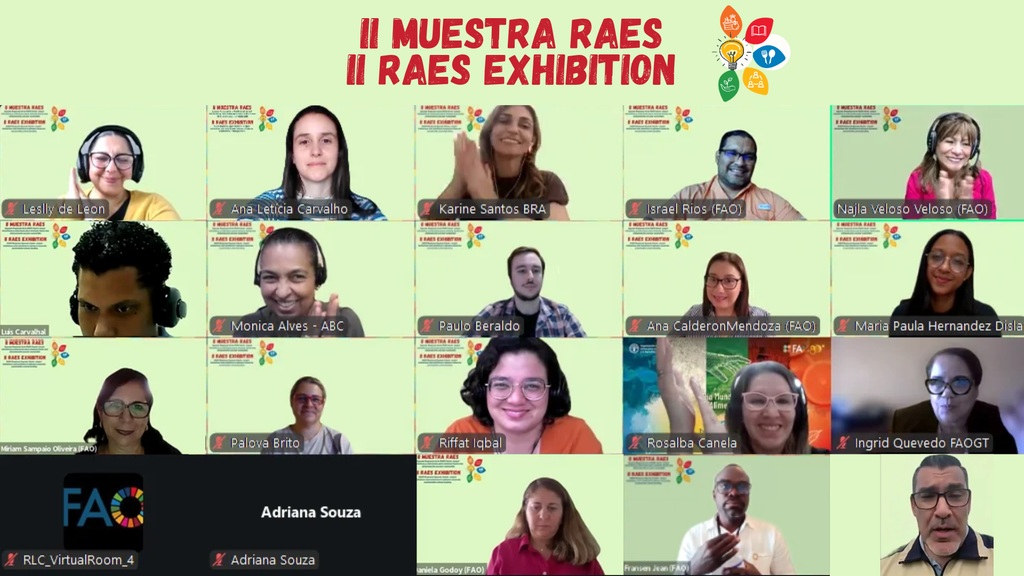
Brasília, Brazil, 5 October 2026 – Ten countries from Latin America and the Caribbean shared experiences and solutions to strengthen school feeding during the II RAES Exhibition, organized by the Sustainable School Feeding Network (RAES) under the Brazil-FAO South-South Cooperation Programme. The virtual event brought together around 120 participants from countries across Latin America and the Caribbean.
The initiatives demonstrated how countries are putting into practice the priorities of the RAES Regional Agenda 2026–2030, with a focus on issues such as promoting healthy diets, food and nutrition education, public procurement from family farmers, programme management and governance, and results monitoring.
RAES is a trilateral South-South cooperation initiative on school feeding promoted by the Government of Brazil, through the Brazilian Cooperation Agency of the Ministry of Foreign Affairs (ABC/MRE) and the National Fund for Educational Development (FNDE), together with member countries from the region. The Food and Agriculture Organization of the United Nations (FAO) serves as the Network’s Executive Secretariat.
Inspiring experiences
Among the initiatives presented, Cuba, Saint Lucia and Belize highlighted the role of school gardens as spaces for learning and production, bringing students closer to topics such as nutrition, agriculture and sustainability. In Uruguay, gastronomic cooperatives showed how school feeding can also become a space for learning, community and participation.
Bolivia’s experience presented strategies to strengthen multisectoral governance, local procurement and the promotion of healthy eating. In Costa Rica, the use of evidence and student participation were highlighted as tools to improve menu acceptance and guide public policy decisions.
In Paraguay, the initiative showed how public procurement can link school feeding programmes with small-scale producers and local markets. Brazil presented an experience incorporating fish into school meals, with benefits for students, producers and local economies.
The Dominican Republic shared the experience of a culinary laboratory aimed at training professionals and promoting the continuous improvement of food offerings. Ecuador, in turn, highlighted food-based dietary guidelines as a nutrition education tool with the potential to support school feeding programmes.
For Riffat Iqbal, Project Analyst at ABC/MRE, the experiences presented show that the region is developing concrete responses to promote food and nutrition security. She also highlighted the role of RAES as a space for cooperation and the exchange of knowledge and solutions among countries.
Israel Ríos, FAO Nutrition Officer, stressed that “innovation is a necessity” to ensure better nutrition, education and development outcomes for future generations.
Karine Santos, coordinator of Brazil’s National School Feeding Programme, implemented by FNDE, stated that “ensuring quality, safe and wholesome school meals means recognizing the dignity of every girl and boy who walks through the doors of a school in our countries.”
Najla Veloso, RAES Executive Secretary and FAO Senior School Feeding Specialist, noted that the initiatives presented by the countries “highlighted the leading role of students, teachers, producers, cooks and other local actors in the experiences presented.”
Exchange strengthening cooperation
Adriana Malvestuto, from the National Institute of Student Welfare (INABIE) of the Dominican Republic, described the experiences as “a very powerful effort with a great purpose for all our students.”
Ana Novo, coordinator of Uruguay’s school feeding programme, said: “We are convinced of the importance of the collective construction of knowledge as a tool for personal growth, the development of society and the democratization of knowledge.”
From Bolivia, Marcelo Añez, national aquaculture expert at the FAO Representation in the country, highlighted that the event presented “enriching experiences that inspire us to continue promoting, in our daily work, initiatives to strengthen school feeding.”
See the video with all the experiences: