The Sustainable School Feeding Network was recognized as evidence of concrete progress toward better nutrition and more sustainable agrifood systems.
Paulo Beraldo
Brasília, Brazil, 8 June 2026 – The Sustainable School Feeding Network (RAES) was one of the highlights of the dialogue between representatives of the Brazilian Government and the Director-General of the Food and Agriculture Organization of the United Nations (FAO), Qu Dongyu, held alongside the Rome Nutrition Week. On the occasion, RAES was recognized as evidence of concrete progress in promoting better nutrition across Latin America and the Caribbean and in advancing more sustainable and resilient agrifood systems.
The meeting was led by Brazil’s First Lady, Janja Lula da Silva, who also serves as FAO Goodwill Champion Against Hunger and Brazil’s School Feeding Ambassador, together with the Permanent Representation of Brazil to the FAO and Related International Organizations (REBRASFAO), Ambassador Carla Cardoso Carneiro, and the President of the National Fund for Educational Development (FNDE), Fernanda Pacobahyba.
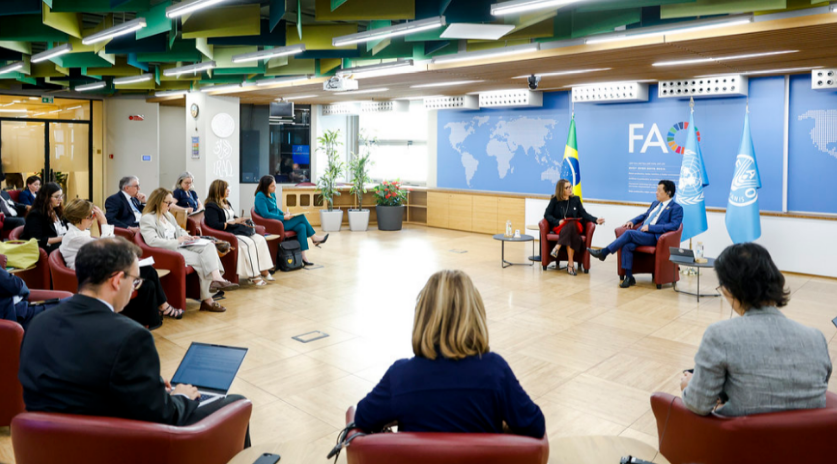
During the meeting, alongside other initiatives implemented by the Brazilian Government, all participants highlighted Brazil’s National School Feeding Programme (PNAE) as a consolidated and transformative public policy that makes it possible to connect multiple sectors and policies, including local food production, food biodiversity, food and nutrition education, and environmental sustainability.
The participants also emphasized that Brazil’s more than 70 years of experience in school feeding has been shared internationally through South-South Cooperation, particularly through initiatives carried out by FNDE and the Brazilian Cooperation Agency (ABC) in partnership with FAO.
In this context, RAES, established in 2018 under this partnership, has become one of the most relevant regional platforms for technical and policy exchange on sustainable school feeding. Today, 18 countries in LAC are formal members of the Network, working together on issues such as the universalization of school feeding, strengthening regulatory frameworks, public procurement from family farming, food and nutrition education, and improvements in school infrastructure.
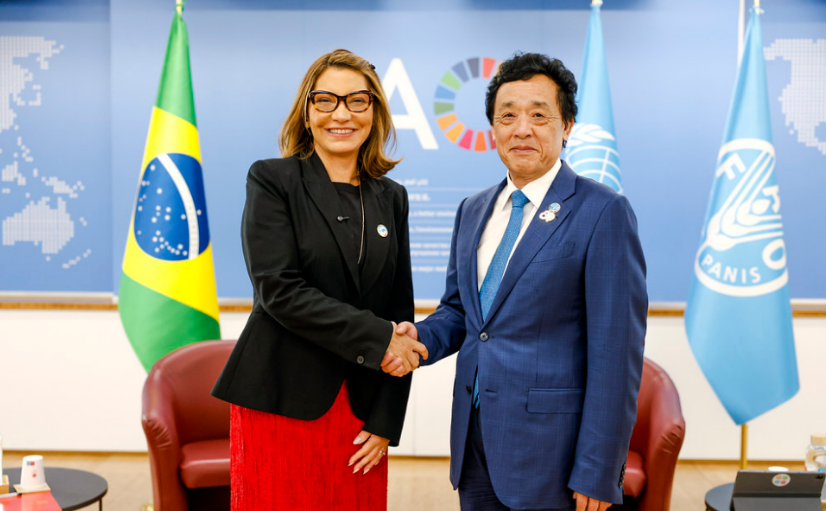
During the meeting, the First Lady and FNDE President Fernanda Pacobahyba highlighted that RAES demonstrates how regional cooperation can generate concrete results for countries while also providing valuable lessons for the Brazilian Government in its international engagement with other partnerships. Among the achievements cited were the training and awareness-raising of thousands of public managers, the approval of school feeding legislation, and the collective development of the Regional Agenda for Sustainable School Feeding, built around the priorities and needs identified by member countries.
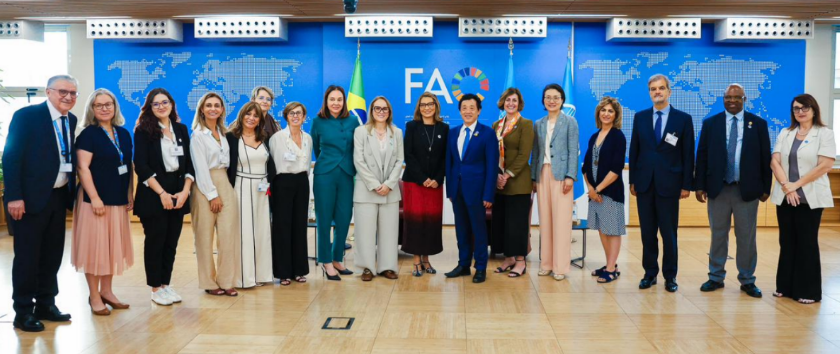
Brazilian authorities also emphasized that Latin America and the Caribbean bring together technical expertise, institutional capacity, progress in food and nutrition security indicators, and successful experiences that can contribute to global discussions on education, health, nutrition, and agrifood, environmental, and economic sustainability.
Rome Nutrition Week was organized by FAO, UN Nutrition, and other Rome-based agencies from 25 to 28 May 2026. South-South Cooperation on school feeding was one of the topics discussed during the event’s panel sessions.