
One in three agrifood workers in Latin America and the Caribbean is a woman. Yet, nearly half of them work without pay and hold little decision-making power. What lies behind this paradox?
The role of women in agrifood systems has become increasingly complex. They no longer only cultivate the land; they are also vendors, entrepreneurs and processors. In Latin America and the Caribbean, women represent 36 % of the agrifood workforce and account for the majority of workers in food manufacturing (55 %) and trade (52 %).
However, these percentages do not tell the whole story. Although women sustain a large part of the rural economy, structural inequalities continue to shape their working conditions. Their work remains undervalued and often takes place under worse conditions than men’s. Much of it is irregular, informal and unpaid, which makes it largely invisible in economic and statistical terms. As a result, nearly half of women receive no recognition for the work they do. While men are often seen as the heads of the household or the primary farmers, according to FAO data, 48 % of women across the region still provide unpaid labour, with little or no say over the management of resources, income and productive activities within the household.
Closing these gaps is not just a matter of justice. It is an essential condition for guaranteeing the future of food security in the region.
Double duty, fewer opportunities
In a horticultural farm in Chile’s Central Valley, a rural woman may begin her day before dawn, preparing breakfast, taking her children to school and then heading to the fields for a workday most likely under a temporary contract. This situation affects 82 % of women in the sector, compared with 42 % of men.
This double burden—both productive and reproductive—is not a choice. It stems from social norms that place almost exclusive responsibility on women for domestic work and unpaid care. The time spent cooking, cleaning and caring for others is time that cannot go into training, looking for better jobs or formalizing a business.
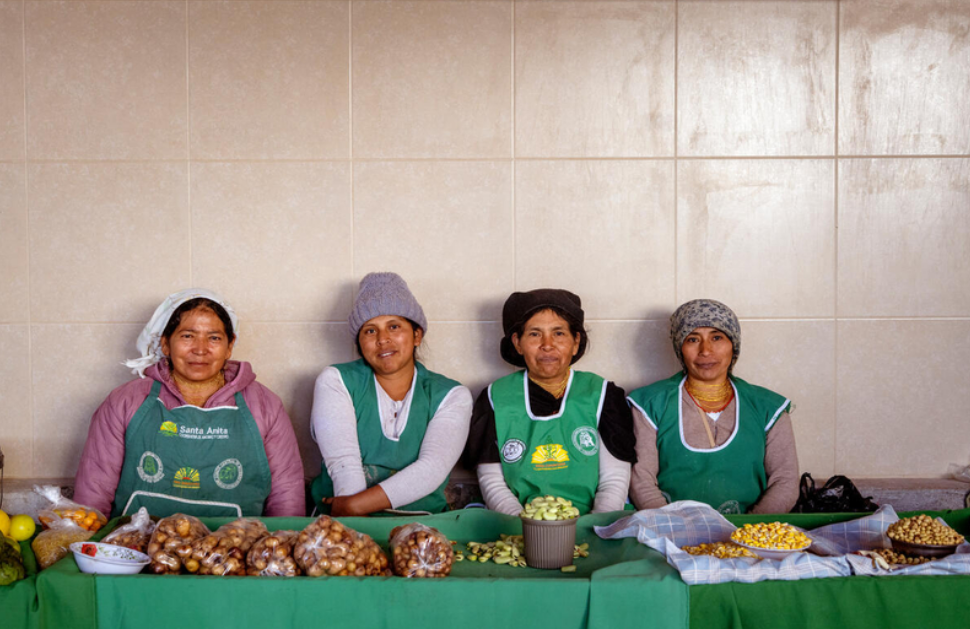
Informality, therefore, is no accident. In many cases, it becomes the only available option within an already saturated schedule. This situation also tends to repeat itself, as seasonal and informal jobs not only reduce income but also leave women outside social protection systems.
Inequality is also evident in land ownership. In Honduras and Peru, men represent 70 % of landowners. Without their own land, women lack the guarantees needed to access credit. This limits their influence not only in production but also in the economic sphere. The impact of this exclusion is also reflected in wages. Although it varies by country, a study across ten countries reported that women earned an average of 82 cents for every dollar a man receives for the same work.
This gap is even present in the design of agricultural technology. Machinery is usually manufactured based on the average strength and height of men, while women are often left out of user testing. In the Plurinational State of Bolivia, for example, a potato grading machine was developed without consulting the women who carried out the work. As a result, the equipment was too difficult to operate and ended up being unused, becoming a barrier rather than a key tool in the value chain.
What the laws do not see
The barriers women face are not only economic but also regulatory. Data shows that less than 15 % of agricultural policy documents in the region directly address social gender norms. Policies that overlook these realities have fewer tools to transform them.
This omission has concrete consequences. In 53 % of the region’s countries, the legal framework protecting women’s land rights is low or non-existent, according to the FAO report, The Status of Women in Agrifood Systems. Although the lack of land titles affects the rural sector in general, data exposes that the gap is wider for women. Without proof of ownership, they cannot apply for bank loans or access state programs that require property as a guarantee.
There is also another gap to consider, which is the lack of data. Even though the region has made progress, we still do not have enough disaggregated information to fully measure these realities. Without clear data, equality programs cannot fix what they cannot see.
Strategies that work
Closing these gaps is possible and there are proven strategies to do so. Legal reforms that guarantee joint land ownership, social protection programs that strengthen women’s employment —such as those implemented in the Plurinational State of Bolivia— and technical training initiatives with documented results in Nicaragua demonstrate that closing these inequalities is not an abstract goal. The same applies to digital technologies. Countries like Costa Rica have set specific targets for female inclusion in broadband access, recognizing that the technology gap is also a productivity gap.
The most persistent challenge remains the burden of unpaid work. As long as domestic and care responsibilities continue to fall almost entirely on women, any other effort will have limited impact. Projects that have helped redistribute these responsibilities within families—such as those developed in Colombia—offer valuable lessons on how to shift the social norms that sustain inequality.
These examples are not isolated exceptions, but evidence that well-designed interventions can produce measurable results. Expanding such experiences will be key to moving toward more inclusive and sustainable agrifood systems.
Read the publication here: https://openknowledge.fao.org/handle/20.500.14283/cd4012es
For More Information
- Guidelines for measuring gender transformative change in the context of food security, nutrition and sustainable agriculture
- Regional platform for the empowerment of rural women
- Gender, hunger and malnutrition — Transforming reality through legislative (only spanish)
Content published by the FAO Regional Office for Latin America and the Caribbean